
Blog / Bishop Honda Dealer

Honda Brake Pad Replacement: What Every Driver in Bishop, CA Should Know

Honda Brake Pad Replacement

If you've noticed a high-pitched squeal when slowing down on your drives around Bishop, California, your Honda may be telling you it's time for a brake pad replacement. Brake pads are one of the most important safety components on your vehicle, and staying ahead of wear can help you avoid more costly repairs down the road. Understanding how the process works—and what Honda's factory standards require—puts you in a much better position as a vehicle owner. 

What Are OEM Brake Pad Thickness Standards? 

Honda brake pad replacement starts with knowing what "worn" actually means. From the factory, Honda installs brake pads with a thickness of approximately 10 to 12 mm, depending on the model and axle position. Most Honda technicians recommend replacing pads when they reach 2 to mm of remaining material. At that point, continuing to drive risks metal-on-metal contact between the pad's backing plate and your rotor. That kind of damage isn’t just unsafe—it can turn a routine pad swap into a much more expensive rotor replacement. Using genuine Honda OEM (original equipment manufacturer) pads ensures the correct friction material, dimensions, and heat tolerance for your specific vehicle. 

Signs Your Brakes Need Attention

One of the most common early warning signals drivers notice is squealing brakes. A small metal indicator tab is built into most brake pads specifically to create that sound when the lining wears thin. When your brakes start squealingthat’s not something to put off—that noise is a clear signal that your pads are approaching the replacement threshold. 

Beyond squealing, if you start getting a grinding sensation when braking, a pulsating brake pedal, or a vehicle that pulls to one side when stoppingyou’re even more ready to get serviceThis can signal metal-on-metal friction with the rotor and it compromises handlingIf the brake warning light illuminates on the dashboard, it typically indicates crucial service is needed for low brake fluid, worn brake pads, a sensor glitch, but it can be something as simple as the parking brake is engaged. Schedule service as soon as possible. Any of these signs paired with squealing brakes is a strong reason to bring your Honda in for an inspection right away. 

The Honda Brake Pad Replacement Process 

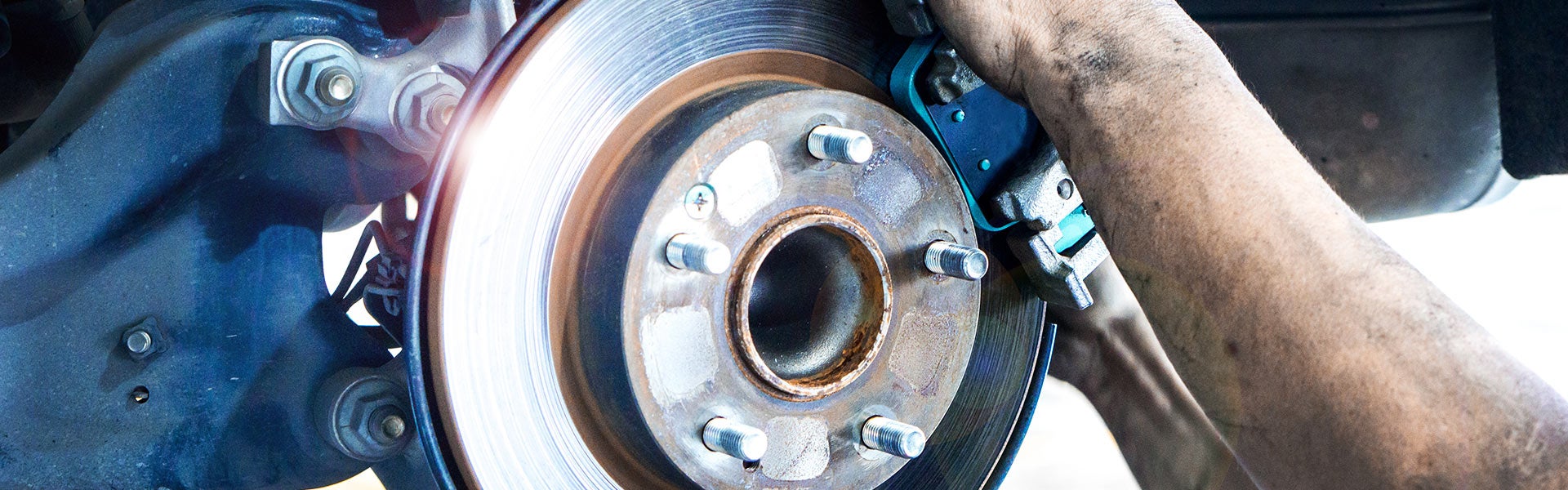
A proper Honda brake pad replacement involves more than swapping out the old pads. A qualified technician will inspect the brake calipers, rotors, and brake hardware to confirm everything is within specification. Rotor thickness and surface condition are checked, brake fluid is assessed, and caliper slide pins are cleaned and lubricated. OEM pads are then installed and the brakes are bed-in using a controlled break-in procedure that seats the new pads evenly against the rotors. This step is important for consistent stopping power and helps maximize the life of your new pads. Skipping it can lead to uneven wear and reduced performance. 

How Often Should You Replace Brake Pads on a Honda? 

Brake pad life varies based on driving habits, terrain, and vehicle use. In general, most Honda owners replace front brake pads every 30,000 to 70,000 miles, with rear pads often lasting longer. Drivers who frequently travel mountain roads or tow trailers may find they need service more often. 

In Bishop, California, the winding terrain and elevation changes can place additional demands on your braking system. More frequent inspections are a smart habit for local drivers who navigate mountainous routes regularly. Checking brake pad thickness at every oil change is a simple way to stay ahead of wear. 

Schedule Your Honda Brake Service Today 

If you're hearing squealing brakes or it's simply been a while since your last brake inspection, Honda brake pad replacement is a straightforward service that provides real peace of mind. Genuine OEM pads, a thorough system inspection, and proper break-in procedures all contribute to safer, more confident stopping. Visit Perry Motors Honda to schedule your appointment with Perry Motors Honda in Bishop, California. We can keep your Honda stopping the way it was designed to.

Posted in:

Related Posts

2026 Honda Passport TrailSport

2026 Honda Passport TrailSport Specs: Built to Leave the Pavement Behind

The 2026 Honda Passport TrailSport isn’t an appearance package pretending to be an off-road trim. Honda gave it hardware designed for the places pavement stops, including an off-road-tuned suspension, skid plates, all-terrain tires, and an AWD system built to manage changing terrain. That combination makes the TrailSport relevant around Bishop, California, where mountain roads, desert routes, gravel, and trail access can all become part of the trip. More important, none of this requires turning the Passport into an SUV that’s difficult to live with the rest of the week. The Suspension Does More Than Sit Taller The TrailSport uses a suspension specifically tuned for off-road driving. That matters once a road gets uneven, because suspension tuning influences how well an SUV controls body movement and keeps its tires working against the terrain. Power comes from a 3.5L V6 producing 285 hp and 262 lbs. ft. of torque. It’s paired with a 10-speed automatic transmission with paddle shifters, giving the TrailSport enough muscle to complement the chassis hardware. The Passport TrailSport is also rated to tow up to 5,000 lb s. when properly equipped with its integrated Class III trailer hitch. That makes the capability useful beyond recreational trail driving, particularly for owners hauling camping equipment, recreational gear, or a trailer out of town. Protection Where Trails Can Hit Hardest Ground clearance only solves part of the problem off pavement. Rocks and trail debris have an unfortunate habit of finding vulnerable components underneath a vehicle. Honda addresses that problem with standard skid plates on the TrailSport. They add protection for key components when the terrain becomes rougher and clearance gets tighter. It’s the sort of equipment that separates useful off-road preparation from styling designed primarily to look adventurous in a parking lot. Tires Built for the Job The TrailSport rides on standard 275/60R18 113T all-terrain tires. Tire choice has a considerable effect on what an SUV can accomplish once loose surfaces replace asphalt, so Honda fitting the proper rubber from the factory is an important part of the package. For drivers exploring routes around Bishop and the Eastern Sierra, those tires complement the suspension and skid plates rather than leaving the TrailSport’s capability dependent on aftermarket upgrades from day one. AWD Gets Smarter About the Terrain The second-generation i-VTM4® AWD system with Trail Torque Logic adds another tool to the Passport’s off-road kit. Instead of relying solely on mechanical hardware, the system helps manage power delivery as traction conditions change. The TrailSport also provides Normal, Econ, Sport, Snow, Tow, Trail, and Sand drive modes. That range gives the driver settings suited to very different jobs, from an ordinary commute to towing or moving across loose surfaces. It’s a broad capability set, but the important part is how the pieces work together. AWD, tires, suspension, protection, and drive modes all address different parts of the same problem. You Still Have to Drive It Home Serious trail equipment is considerably more useful when the vehicle surrounding it remains comfortable on pavement. The Passport TrailSport keeps the cabin equipped for normal life with a 12.3-inch color touch-screen, wireless Apple CarPlay® and Android Auto™ compatibility, and heated front seats. That dual role is one of its more useful qualities. You can explore beyond Bishop without owning something that feels compromised once you return to paved roads. See What the TrailSport Hardware Can Do The 2026 Honda Passport TrailSport takes a frank approach to off-road capability: give the SUV the suspension, protection, tires, AWD technology, and driving modes needed to handle tougher terrain, then retain the comfort expected from a modern Honda SUV. Drivers can explore the Passport inventory at Perry Motors Honda, compare available models, and take a closer look at the TrailSport’s equipment. When you’re ready to experience how that hardware feels from behind the wheel, schedule your 2026 Honda Passport TrailSport test drive online.

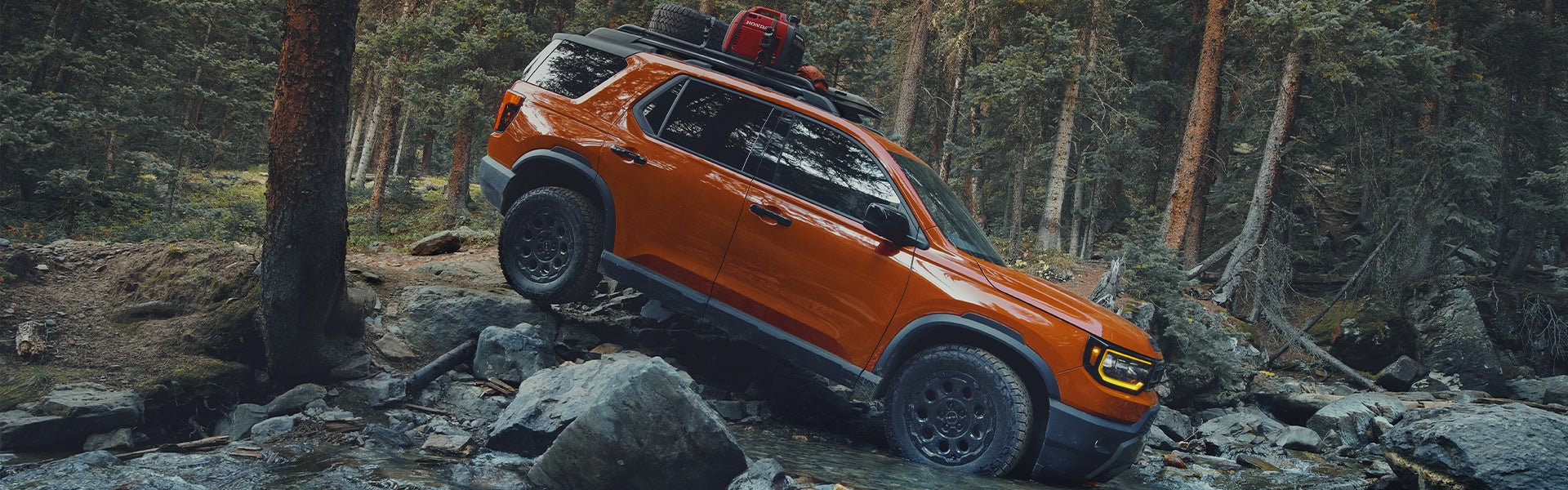
Orange Honda Pilot TrailSport SUV driving over rocks in a pine forest.

2026 Honda Passport TrailSport Specs: Built for the Trail

Honda's Most Rugged SUV Just Got Even Better Are you searching for an adventure-ready SUV that maintains everyday comfort? The 2026 Honda Passport TrailSport delivers exceptional capability for trips into the Eastern Sierra or navigating back roads near Bishop, CA. Honda engineered this model to be its most rugged SUV ever, and the hardware proves it. Reach out to the team at Perry Motors Honda today to discover how this vehicle can elevate your next journey. more All-Terrain Tires Built for Serious Off-Roading The TrailSport features standard all-terrain tires designed to grip loose dirt, gravel, and uneven surfaces while maintaining smooth highway performance. This factory setup provides a significant advantage for off-road enthusiasts, eliminating the need for aftermarket tire upgrades before hitting the trail. Suspension Upgrades That Change the Ride Honda upgraded the TrailSport suspension to increase ground clearance and off-road articulation. This tuned setup absorbs rough terrain effectively, giving drivers total confidence on uneven ground. These enhancements deliver tangible benefits when navigating rocky paths or sudden elevation changes. Capability You Can Feel On and Off the Road A 3.5 L V-6 engine powers the 2026 Passport TrailSport, paired with standard intelligent variable torque management all-wheel drive. This system directs torque between the rear wheels to maximize traction in difficult conditions. The TrailSport includes functional exterior styling, a rugged front skid plate, and increased ground clearance to deliver genuine off-road performance. What Makes the TrailSport Stand Out Engineered specifically for off-road use, the Passport TrailSport offers a complete factory-ready solution. Inside the well-equipped cabin, drivers enjoy a large touchscreen featuring standard Apple CarPlay© and Android Auto© integration, supportive seating, and smart storage options. You receive premium trail capability alongside excellent everyday livability. Contact Perry Motors Honda The team at Perry Motors Honda in Bishop, CA is ready to help you explore the 2026 Honda Passport TrailSport specs in person. With standard all-terrain tires, upgraded suspension, and standard all-wheel drive, this SUV confidently navigates any environment. Stop by our dealership or browse our online inventory to find the perfect trim for your next adventure.

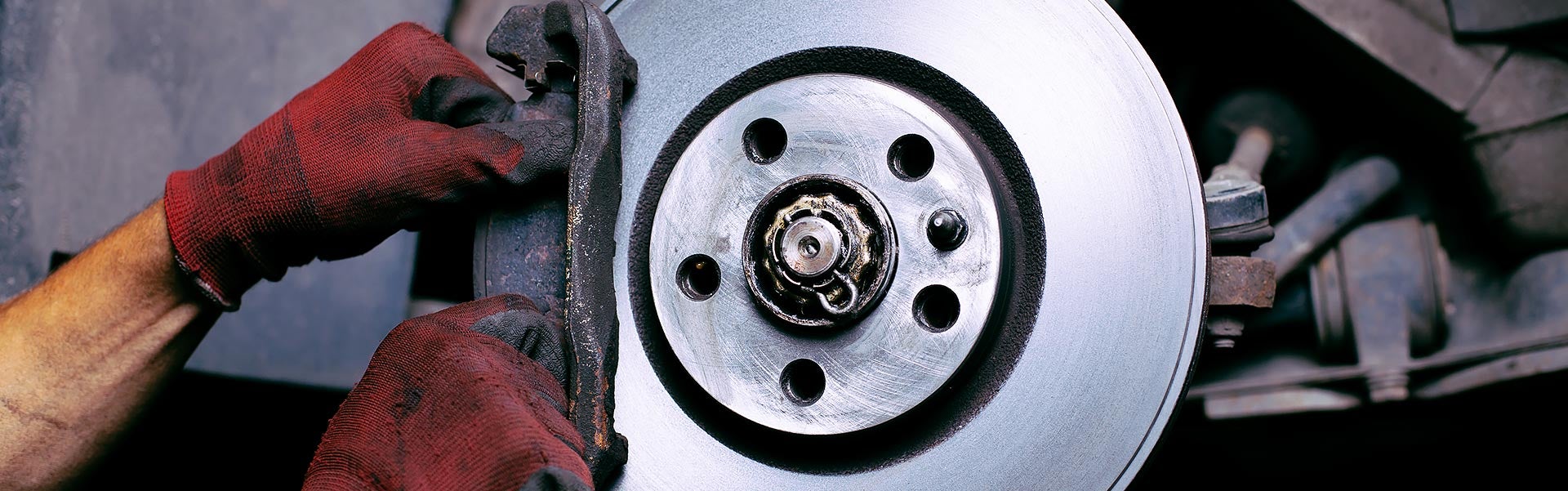
A mechanic installing new brake pads on a vehicle's disc brake rotor assembly.

What to Know About Honda Brake Pad Replacement

When it comes to keeping your Honda safe on the roads of Bishop, California, Honda brake pad replacement is one of the most important maintenance tasks you can stay on top of. Brake pads are the components that create friction against your rotors to slow and stop your vehicle. Over time, that friction material wears down, and knowing when to replace it can make all the difference for your safety and your vehicle's long-term performance. Honda designs its factory brake pads to meet strict standards for durability, heat resistance, and consistent stopping power. They’re engineered specifically for each model, meaning the pads in your Civic behave differently than those in a Pilot or CR-V—and that precision matters. more How Long Do Honda Factory Brake Pads Last? One of the most common questions Honda owners ask is how long their brake pads are built to last. Honda factory brake pads are designed with longevity in mind, typically lasting between 30,000 and 70,000 miles depending on driving habits, terrain, and load. If you spend a lot of time in stop-and-go traffic or on hilly terrain in Bishop, California, you may find your pads wear faster than those who primarily drive on open highways. Aggressive braking shortens pad life, while smooth, gradual stops help preserve the friction material over a longer period. Honda's factory pads use a friction compound that is calibrated to minimize brake dust while maintaining reliable performance across temperature ranges. That balance of cleanliness, quiet operation, and durability is part of what sets OEM (original equipment manufacturer) pads apart from many aftermarket alternatives. Signs Your Honda Needs New Brake Pads Knowing when to schedule Honda brake pad replacement starts with recognizing the warning signs. The most recognizable indicator is the dreaded high-pitched squealing sound when you apply the brakes. That noise is produced by a small metal wear indicator built into the pad, which contacts the rotor when the friction material gets too thin. If you’re dealing with squealing brakes, that sound is your vehicle telling you it is time for service. Beyond squealing, other signs include a grinding sensation underfoot, longer stopping distances, or a brake pedal that feels softer than usual. A vibrating steering wheel when braking can also signal uneven pad wear or rotor damage. If you notice any of these symptoms, it is best not to delay getting an inspection. The Importance of Using Honda OEM Brake Pads When it is time for Honda brake pad replacement, using original equipment manufacturer pads makes a meaningful difference. Honda OEM brake pads are designed to meet the same specifications as the pads that came with your vehicle from the factory. They fit precisely, wear evenly, and work in harmony with your ABS (Anti-lock Brake System). Aftermarket pads can vary widely in quality. Some may be noisier, wear faster, or generate more heat than Honda-designed components. A certified Honda technician in Bishop can assess whether your current pads—OEM or aftermarket—are the right fit for your vehicle and driving conditions. Keeping Your Honda Stopping at Its Best Staying current with Honda brake pad replacement is one of the simplest ways to protect your investment and your passengers. Honda's factory brake pads are built for durability and precision, but even the best components need attention over time. Whether you have noticed a squeal, a grind, or it’s simply been a while since your last inspection, bringing your vehicle in sooner rather than later is always the right call. Drivers throughout Bishop, CA can count on the service team at Perry Motors Honda to keep their braking system performing the way Honda intended.